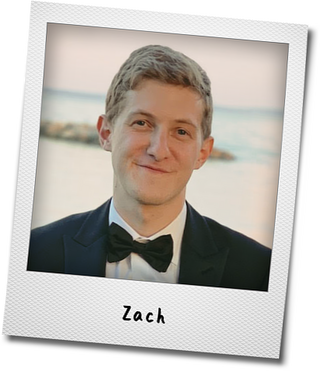
Like a proud father, Clarendon is delighted to introduce our new US university consultant Zach Fisch. And if we were Zach’s actual father, how proud we would be. Zach is a graduate of Haverford College and Harvard Law School, where he received the Dean’s Scholar Prize and was selected as Commencement Speaker. His career has been impressive and varied: he’s been the chief of staff for a US Congressman, he’s worked as an advisor to the NHS and has worked on the operations side of the Brooklyn Nets NBA team. On top of this, Zach is a charming young man and an absolute font of knowledge on the US university landscape. If you’d like to talk to him, do get in touch.
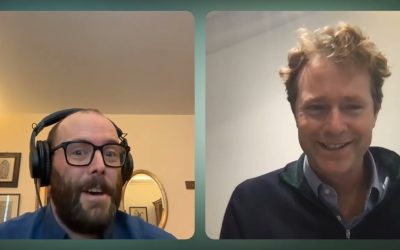
We sat down with him in the office and asked him a few questions:
What advice would you give to a student (or a parent of a student) who is thinking about going to university in the US?
US applications are a fundamentally different exercise from UCAS. American universities generally aren’t admitting you to a specific academic program; they’re assembling a community. That means the personal side of your application carries real weight. That’s also, from my perspective, the greatest advantage of going to university in the states versus the UK — you don’t have to decide what you’re going to study before you set foot on campus. You have a year or two to explore before committing.
For parents, my advice is to be a sounding board rather than a project manager. The strongest applications I’ve worked on came from students who owned the process — and admissions officers can tell the difference immediately. Your job is to keep the conversation open, keep the list realistic, and keep perspective when the process gets stressful.
Obviously, everyone has heard of the Ivy League schools, MIT and Caltech, but beyond the big hitters, how should a student choose the right US university for them?
The single biggest mistake I see families make is being single-minded about these schools. Even for impeccably qualified applicants, getting into these places is like winning the lottery. And even if you do get in, sometimes they’re just not the right fit.
I always tell students to start with themselves, not the rankings. The US has over 2,000 four-year universities, and the differences between them are far greater than anything you’d find in the UK — in size, teaching style, campus culture, even climate. Do you want to be taught in seminars of twelve, or lectures of four hundred? A campus that empties at weekends, or one that’s a world unto itself? Do you thrive on competition or collaboration?
The “right” university is the one where you’ll do your best work and become your best self, and for the vast majority of students, that isn’t one of the eight schools everyone can name.
What is a good number of colleges to apply for?
Unlike UCAS, there’s no cap on the number of US unis you can apply to. I recommend ten to fifteen, thoughtfully chosen. Fewer than ten and you’re leaving too much to chance in what has become a genuinely unpredictable process; push past fifteen and you’re probably wasting your time on unnecessary applications.
The composition matters more than the number: a sensible list balances a few ambitious “reach” schools, a core of realistic targets, and a handful of “likelies” you’d genuinely be happy to attend. That last part is important — there should be no school on your list you’d be disappointed to end up at. If there is, take it off and find a better fit.
Students need great SAT scores, but what sets apart an outstanding Common App essay?
The biggest mistake UK students make is recycling their UCAS statement, or another academic essay — that is absolutely not what US admissions officers want. They want to know who you are.
I always tell students to be honest, and zoom in. The essays that succeed are usually about something tiny: a conversation with a grandparent, a job washing dishes, a failure that actually stung. You want to show them how you think through storytelling.
I spent years as a speechwriter and political ghostwriter before doing this work, and the principle is identical: the reader should finish the piece feeling they’ve met a real person, in that person’s own voice. If your parents read your essay and say “this sounds exactly like you” — even the slightly odd, unpolished parts — you’re on the right track. If they say “this sounds so mature,” it probably needs some work.
What extracurriculars are important for US universities?
The ones you actually care about. There’s no right or wrong extracurricular. American admissions has moved away from the “well-rounded student” with ten shallow commitments and towards what’s often called the “spiky” student — someone with genuine depth in two or three things, ideally with evidence of initiative and impact. Four years in one activity, rising to lead it or building something within it, beats a CV of one-year memberships every time.
And the definition of “extracurricular” is broader than families expect: a part-time job, caring for a sibling, running a small online business, a serious personal project — these all count, and often count for more, because they’re harder to manufacture. Universities aren’t ticking boxes; they’re trying to predict what you’ll contribute to their campus. Show them what you do when nobody’s making you.
On a more personal note, what is your favourite memory from your time at Harvard?
The law school’s bicentennial. The whole school shut down for a couple of days and transformed into an enormous collection of talks as alumni from all over the world descended on campus. Choosing between panels was honestly stressful — I saw CEOs, leaders of sports teams, members of Congress, US Senators and attorneys general speak, and missed way more than I caught.
The day ended at Sanders Theatre with six sitting and retired Supreme Court justices discussing their time on the court. Chief Justice Roberts opened with the line, “A minority of the justices send their regrets.” Cheeky? Sure. Interesting? You bet.
Harvard is a world unto itself, but there are dozens of American universities full of people who have changed, and will change, the world. You probably haven’t heard of most of them. But if you’d like to learn about them, let’s talk — we can find the right one for you.