

The Times recently announced their 2026 University League Table. It’s behind a paywall, so we will reveal some highlights.
The top 10 this year was:
- LSE
- St. Andrews
- Durham
- Cambridge
- Oxford
- Imperial
- Bath
- Warwick
- UCL
- Bristol
You may have noticed a certain amount of attention – schadenfreude, dare we say – at both Oxford and Cambridge falling out of the top 3. Those of you with a Times login will see that each university receives a score, with LSE scoring 1000 and Bristol scoring 814.
What does the score mean and how does the Times arrive at it? Data is collected by the Higher Education Statistics Agency (Hesa) and supplied by Jisc, an education research company. There are rows and rows of very precise looking scores, but, despite this, there is an inherent subjectivity in these scores that their presentation belies. Is the student experience at the University of Strathclyde really 10 percentage points better than at Oxford, or does the student experience at Strathclyde surpass the expectation so much more than at Oxford, where students’ expectations are immense? These nuances are not factored in to the table.
There are scores for:
- Teaching quality – There are categories for teaching, learning opportunities, assessment and feedback, as well as academic support. Scores are based on students’ responses.
- Student experience – This is based on organisation and management, learning resources and student voice themes. Scores are based on students’ experience. Weighted less than teaching quality.
- Research quality – More objective. There are 4 categories for – world leading, internationally excellent, internationally recognised, unclassified – for research. The traditional big hitters tend to do well.
- Entry standards – Easily ranked and compiled. Objective.
- Graduate prospects – Based on a graduate survey 15 months after graduation. There is much better data available.
- First/2:1s – Not a bad data set, but important to not to confuse this with the quality of the teaching.
- Continuation rate – % of undergraduate students still in full time education after one year. ie – a positive examination of drop out rates.
- People & Plane – 14 ethical and environmental criteria. Wishy washy.
Clarendon does not mean to be overly critical; ranking universities is hard, the Times does a great job at being comprehensive and using strictly objective data would be too limiting.
Other global rankings do similar things, but with different criteria and different methods.
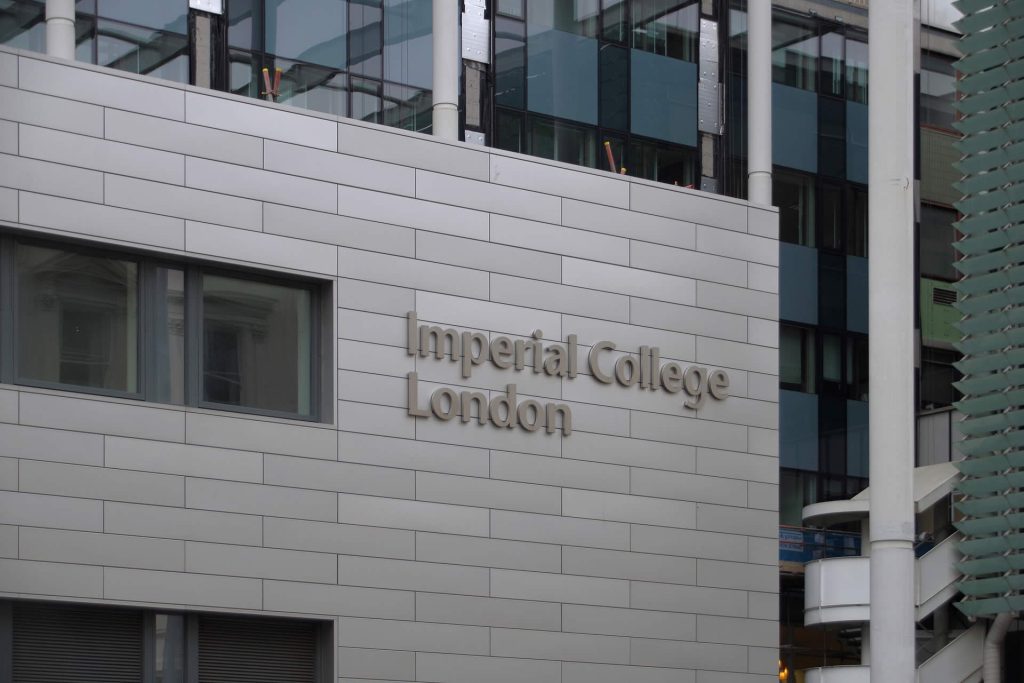
QS Global Rankings
The QS global rankings are compiled by Quacquarelli Symonds, a global higher education analysis firm.
Here are their rankings (we have put global rank in brackets):
- Imperial (2)
- Oxford (4)
- Cambridge (6)
- UCL (9)
- King’s (31)
- Edinburgh (34)
- Manchester (35)
- Bristol (51)
- LSE (56)
- Warwick (74)
These rankings are worked out by:
- Research and discovery – Scores for citations per faculty and academic reputation (based on a huge global survey of academics).
- Learning experience – Faculty per staff ratio.
- Employability – Like the Times, this uses the 15 month gradate employment stats AND a global survey of firms who employ graduates from international universities.
- Global engagement – based on ratio of international students; diversity of international students; global research networks and diversity of faculty.
- Sustainability – measures sustainability through set criteria, like net zero commitments, as well as ethical and social criteria. Again, not unlike the Times.

Academic Ranking of World Universities or Shanghai Rankings
The Academic Ranking of World Universities or Shanghai Rankings are much more academic in focus, weighting academic prize winners, research prize winners, academic citations etc.
- Cambridge (4)
- Oxford (6)
- UCL (14)
- Imperial (26)
- Edinburgh (37)
- Manchester (46)
- King’s (61)
- Bristol (98)
- Warwick (101-150)
- Glasgow (101-150)
For UK universities it is also worth bearing in mind the following gropings that you will often hear:
Russell Group: The Russell Group is a consortium of 24 top UK universities recognised for world-class research, teaching excellence, and strong links with industry.
Sutton 13: The Sutton 13 are the UK’s most selective universities, recognised for academic excellence, competitiveness, and strong graduate outcomes, judged by education charity The Sutton Trust. (Cambridge, Oxford, Imperial, LSE, UCL, York, Warwick, Bristol, Nottingham, St. Andrews, Birmingham, Edinburgh, Durham)
Golden 5: The Golden Five are the UK’s most prestigious and selective universities, known for exceptional research, teaching, and global reputation – the UKs Ivy League. (Cambridge, Oxford, Imperial, LSE, UCL)
And, breathe.
There’s a lot of lists to take in.
Here are our takeaways
1. For an international job market, it is worth considering international ranking tables
The Times is comprehensive on the UK university experience, but QS considers international employability reputation. This is an impotent distinction.
2. Employability is worth considering in conjunction with the degree itself
Sadly, a degree in English Literature from Oxford is not as employable as a degree in Computer Science and Information Systems from Warwick.
3. The university experience is by its nature subjective
Take the Times rankings with a pinch of salt, remember the ‘expectations factor’ and visit the university yourself.
4. The university experience is about more than the degree
Are you interested in networking (think London unis), sports (Bath, Loughborough), culture (Edinburgh, Manchester) or a collegiate / campus experience (Durham / York)?
5. Don’t be overwhelmed and see this as a ‘final’ choice
If you really enjoy the subject you’ve chosen, so many of these universities will offer you a great experience. Also, between 35-40% of undergraduates enrol in a Master’s programme within 5 years of graduating, so you can experience another university.
Photographs by Acumen Images / Matt Buck / Jean-Luc Benazet

